


Although media portrayals of eating disorders traditionally focus on girls and women, these serious mental health conditions also affect boys and men.
For decades, researchers have focused mostly on girls and women, too. But a growing body of research in recent years shows that eating disorders among boys and men are on the rise, and that these conditions have different patterns in males than females.
Eating disorders in girls and women often center around a thin ideal, leading to extreme calorie restriction and conditions such as anorexia. But boys and men tend to idealize a lean and muscular body. The preoccupation or obsession with building muscles — a sense of not having enough muscles, even though the person’s build may be normal or even muscular — is called muscle dysmorphia, also known as bigorexia and reverse anorexia.
To gain more muscle, young men may develop harmful behaviors such as consuming too much protein while restricting carbs and fats, using muscle-building drugs and dietary supplements — most of which are unregulated — and exercising excessively, said Dr. Jason Nagata, an associate professor of pediatrics in the Division of Adolescent and Young Adult Medicine at the University of California, San Francisco, during a 2023 online briefing hosted by SciLine, a free service for journalists and scientists based at the American Association for the Advancement of Science.
The overall lifetime prevalence of eating disorders in the U.S. is estimated to be about 9% among females and 4% among males, according to a 2020 report by the Strategic Training Initiative for the Prevention of Eating Disorders, better known as STRIPED, at Harvard T.H. Chan School of Public Health. Some evidence suggests that the rates of eating disorders in males are increasing at a faster rate than in females, according to a 2019 review of literature.
“While people with eating disorders experience immense stigma in disclosing their struggles, men may experience a double stigma given the feminized associations with the illness,” Nagata said.
Because most clinical screenings and assessments focus on behaviors such as fasting, skipping meals, severe restriction of food intake and the use of laxatives and diuretics, providers are more likely to miss eating disorders in males.
In addition, many inpatient treatment programs for eating disorders don’t accept boys and men, Nagata said.
“Even the programs that do accept them, sometimes they may be the only participant who’s a boy or man and then they can feel more isolated if they can’t relate to some of the certain behaviors, other issues that other people are experiencing,” he said.
By the numbers
Eating disorders are serious mental health conditions that affect millions of Americans each year and cost the U.S. economy more than $65 billion a year, including missed work hours, emergency department visits and hospitalizations.
The exact cause of eating disorders is unknown, but several factors can increase the risk of developing eating disorders, including family history, mental health conditions such as anxiety, depression and substance use disorders.
Other factors that negatively affect body image, especially among youth and adolescents, include family, friends and social media use.
Nearly 30 million Americans will have an eating disorder at some point in their lifetime, according to the 2020 STRIPED report. That’s about 9% of the U.S. population.
One in seven U.S. men will experience an eating disorder by age 40, with peak onset in late adolescence and early adulthood, according to a 2019 study in JAMA. That’s compared with one in five females.
“What people often don’t realize is that eating disorders are among the deadliest of any mental health condition,” says S. Bryn Austin, founder and director of STRIPED.
Death rates from eating disorders, particularly anorexia, are higher than other mental health disorders, studies find. The only other mental health condition that leads to more deaths is opioid use disorder, Austin says.
Eating disorders can affect vital organs, including the heart. More than 10,000 people die from an eating disorder in the U.S. each year, according to a 2020 report by STRIPED.
The main types of eating disorders are:
- Anorexia nervosa, characterized by distorted images of the body and a significant and persistent reduction in food intake that leads to very low body weight.
- Bulimia nervosa, characterized by binge eating — eating large amounts of food in one sitting — followed by vomiting or misuse of laxatives, fasting and excessive exercise to get rid of the extra calories.
- Binge-eating disorder, characterized by eating large amounts of food in a short amount of time, feeling unable to stop eating.
- Other specified feeding or eating disorders — also called OSFED — include conditions such as purging disorder, night eating syndrome and atypical anorexia nervosa. Researchers have criticized the category as arbitrary.
A 2022 report by the U.S. Preventive Services Task Force provides the following rates of eating disorders in males and females:
- The rate of anorexia among adult males is 0.12%, compared with 1.42% in females.
- The rate of bulimia is 0.08% among males, compared with 0.46% among females.
- The rate of binge eating disorder is 0.42% among males, compared with 1.25% among females.
- Eating disorder prevalence ranges from 0.3% to 1.3% among adolescent males, compared with 0.3% to 2.3% among adolescent females.
Boys and men who are sexual or gender minorities also report higher rates of body dissatisfaction and disordered eating, compared with their cisgender, heterosexual counterparts, studies find.
Underrepresented in research
Males have been historically underrepresented in research studies about eating disorders.
Even though boys and men make up a quarter of all cases of anorexia nervosa, less than 1% have been historically included in research studies, according to a 2019 study published in the journal Child and Adolescent Psychiatric Clinics of North America.
More researchers have been studying eating disorders in males in recent years, but federal funding for eating disorders has been historically low and may be reduced even more under the current administration.
Funding for eating disorders research increased from $28 million in 2016 to $55 million in 2022 — but it has remained flat since, according to the National Institutes of Health’s Research Portfolio Online Reporting Tools, or RePORT.
Today, researchers fear that the ongoing cuts to federal grants will disproportionately impact eating disorders, according to a June article in STAT.
At least seven eating disorder research grants from the NIH amounting to $2.7 million were canceled across five states and the District of Columbia between January and April, according to figures that Austin and her team at STRIPED prepared in May for the Eating Disorders Coalition, an advocacy organization, advancing the federal recognition of eating disorders as a public health priority.
“It’s the young people who are most debilitated by eating disorders when they have their entire work life ahead of them, which means the impacts on the economy are that much bigger,” Austin says.
STRIPED has calculated the state-by-state cost of eating disorders, taking into account factors such as the costs of emergency department visits and lost work hours.
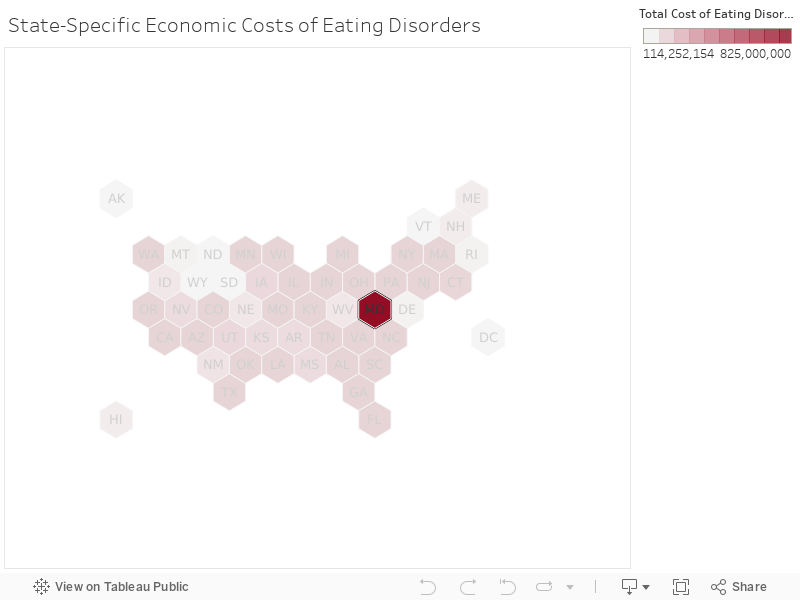
Below, we’ve summarized several studies, including the 2022 report by the USPSTF, an organization that reviews the existing body of research to issue evidence-based recommendations about how to prevent disease and prolong life.
“Boys and men may have really significant muscularity concerns that can still lead to very significant medical and mental health consequences,” Nagata said. “[Make] sure that in the stories that you’re telling, the people you’re interviewing, you try to include that diversity in all areas in terms of gender, sexual orientation, race, ethnicity, class or socioeconomic status, size and even age.”
Research roundup
Eating Disorders in Males
Sasha Gorrell and Stuart B. Murray. Child and Adolescent Psychiatric Clinics of North America, October 2019.
The study: This paper examines eating disorders in males, with a focus on adolescents and youth. Researchers synthesized evidence, most of which was from papers published after 2000, on prevalence, symptoms, risk factors and treatment gaps. The study highlights how body image concerns among boys and men, particularly a focus on building muscles, make eating disorders different from girls and women.
The findings:
- Eating disorders among boys and men are more common than previously thought. Males make up about a quarter of anorexia and bulimia cases in the U.S.
- Eating disorders among boys and men are often tied to building muscles — bulking up, compulsive exercising, using steroids — and not just thinness, which is more common among girls and women.
- One pattern of disordered eating among boys and men involves “bulking and cutting.” For bulking, “targeted consumption of protein is typical and often includes somewhat rigid and arbitrary guidelines for the amount, timing, and type of protein consumed,” the authors write. During this phase, a desire for leanness may also emerge, which leads to the calorie-cutting phase, where dietary restriction can be extreme.
- “Although much of the empirical evidence for these practices is nascent, up to 60% of all boys in the United States report purposefully manipulating their diet in striving for greater muscularity,” suggesting notable links between the desire to build muscles and developing an eating disorder, the authors write.
- Some of the barriers to treatment include stigma, diagnostic tools that are created around female eating disorders and a lack of male-focused treatment programs.
- Males with eating disorders have a higher hospitalization rate due to delayed diagnosis.
Key takeaway: “Given a limited number of studies specific to boys, low sample size in samples of men in mixed-sex trials and assessment methods that retain bias and cull symptoms more specific to females (e.g., internalization of a thin ideal), developing and testing assessment tools specifically among males is unequivocally essential to future assessment, diagnostic, and treatment endeavors,” the authors write.
Exploring Muscularity Concerns and Behaviours Among Boys and Men with Probable Eating Disorders
Kyle T. Ganson; et al. Body Image, September 2025.
The study: This study draws from the results of an online survey of 937 males between the ages of 15 and 35 years, conducted between March and April 2024 in the U.S. and Canada. The goal of the study was to compare worries of having enough muscles or looking muscular enough — concerns with “muscularity” — among men with and without an eating disorder diagnosis.
The findings:
- Those who had probable anorexia and bulimia had higher concerns about building up their muscles, compared with those who didn’t have an eating disorder.
- Participants with probable binge-eating disorder reported significantly lower concerns with their muscularity than those with anorexia or bulimia.
- Across the entire survey sample, the drive for wanting to have bigger muscles was relatively uniform, suggesting that pressure to pursue muscularity is widespread among men, regardless of an eating disorder diagnosis.
Key takeaway: “The findings provide preliminary support for the need for more inclusive diagnostic criteria for anorexia nervosa/atypical anorexia nervosa and bulimia nervosa to account for the experiences of boys and men, and clinicians should consider screening for and treating muscularity concerns and behaviors among boys and men with anorexia nervosa/atypical anorexia nervosa and bulimia nervosa,” the authors write.
Pair this study with another analysis of the survey by the same research team, published in April 2025 in Eating Behaviors.
Eating Disorders in Boys and Men
Tiffany A. Brown and Pamela K. Keel. Annual Review of Clinical Psychology, February 2023.
The study: This study is a narrative review of existing research, synthesizing findings across a large body of research. It summarizes how historically, eating disorder research and clinical care have overwhelmingly focused on girls and women, reinforcing the stereotype that eating disorders are a “female problem.”
Highlights from reviewed studies:
- Rates of eating disorders in boys and men vary widely depending on the study and population. For instance, the lifetime prevalence of bulimia ranged from 0.03% in a sample of Iranian boys to 1.5% in a sample of Australian men. A one-year prevalence of bulimia ranged from 0.01% in a multinational European sample of men to 1.8% in a sample of Australian boys.
- A robust body of literature provides evidence that sexual minorities — gay, bisexual, pansexual, queer — and gender minorities, such as transgender men, are at increased risk for body-image concerns and eating disorders compared with their cisgender, heterosexual counterparts.
- Also at risk are athletes, racial and ethnic minority groups, and middle-aged men.
- Factors that increase the risk of eating disorders among boys and men include social media, family, friends and partners. In addition, gender roles, mental health disorders, and some biological factors can increase the risk.
- The paper also reviews new clinical assessments that are designed specifically for men or are inclusive of men, and prevention efforts for this population.
- In addition, the paper reviews studies about treatments and outcomes. Treatment barriers for boys and men include stigma, low rates of diagnosis and underrepresentation in clinical trials.
- Estimates of death rates from eating disorders in boys and men vary across studies, ranging from 4% to 15.2% for anorexia; 0% to 11.1% for bulimia; and 4.3% to 6.4% for other eating disorders.
The takeaway: “While [eating disorder] treatment outcomes are generally comparable across genders, recovery eludes many male patients, and clinical researchers have yet to adapt existing treatments per guidelines for men to determine whether outcomes can improve. Moreover, systematic evaluation (e.g., manualizing and testing) of recommended adaptations will be critical to develop their evidence base and support dissemination. Continued research efforts such as these will be crucial to reduce the public health consequences of EDs in boys and men,” the authors write.
Screening for Eating Disorders in Adolescents and Adults
U.S. Preventive Services Task Force, March 2022.
The report: The report is USPSTF’s first systematic review of the existing body of research to evaluate the benefits and harms of screening for eating disorders in adolescents and adults with a normal or high body mass index. The organization reviewed 57 studies.
The findings: Due to insufficient evidence, the organization could not determine the benefits and harms of screening for eating disorders in adolescents and adults.
- Of the 17 studies that evaluated screening questionnaires, only two included adolescents and offered very limited data on males.
- Of the 40 randomized clinical trials that tested interventions for eating disorders, most involved adults and women with binge eating disorder and bulimia nervosa. Only one trial was limited to adolescents. None of the trials focused on anorexia.
Key takeaway: “There are several critical evidence gaps in understanding the potential net benefit of screening for eating disorders. More studies are needed that address the following areas,” according to the USPSTF:
- Screening and early treatment trials that focus on health outcomes and that enroll populations that were screened at general primary care settings.
- Studies on the potential harms of screening, such as labeling and false-positive results.
- Trials addressing the benefits and harms of screening and treatment in adolescents, men, and across sexual orientation/gender identity and racial and ethnic populations.
- Accuracy studies enrolling asymptomatic adults and adolescents from primary care settings that use consistent definitions and reference standards to define eating disorder conditions.

Expert Commentary