
Food, Agriculture, Immigration, Jobs, Security, Military
Implications of Immigration Policies for U.S. Farm Sector and Workforce
Tags:
Research Findings
In the United States, illegal immigration has long been the subject of public debate as well as political skirmishing. The 1986 Immigration Reform and Control Act (IRCA) attempted to reduce the flow of undocumented immigrants through a mix of amnesty programs, increasing monitoring of employers and tighter border controls; after the 9/11 attacks, policy shifted toward enforcement, even as the collapse of the housing markets in 2007 led to declining rates of immigration. Despite this, immigration is still a key issue in the 2012 presidential contest.
A 2011 study published in Economic Inquiry, “Implications of Immigration Policies for U.S. Farm Sector and Workforce,” examined the effect of U.S. immigration policy on the flow of unauthorized immigrants from Mexico and the subsequent impact on the nation’s economy. The researchers, based at Washington State University and the University of Idaho, modeled the relationship between restrictive policies and the productivity of the U.S. agricultural sector.
The findings include:
- There is a strong relationship between spending on border security and rates of illegal immigration from Mexico. “As the probability of apprehension of illegal immigrants at the border increases, the flow of undocumented workers into the United States lessens.”
- A 10% increase in domestic enforcement spending, primarily worksite surveillance, reduces the wage rate for illegal workers more than 11%; curbs illegal labor use by approximately 9,000 workers to U.S. agriculture; and decreases U.S.-Mexico commodity trade by an average of $180 million.
- “Heightened border enforcements reduce the employment of undocumented workers and commodity production, which causes U.S. agricultural exports to Mexico to decline by an average of 5%.”
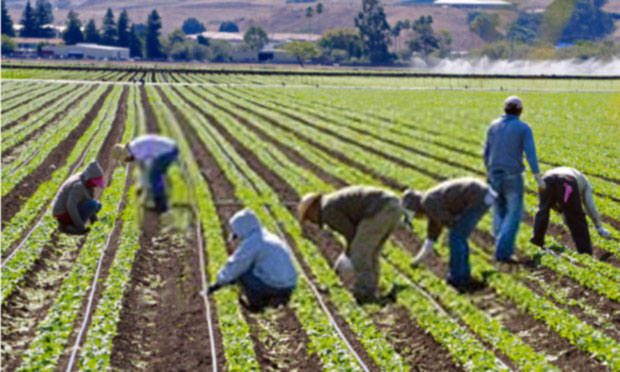
- Reductions in the immigrant labor force has caused labor shortages in several states and has had “devastating effects on farm production and profitability.” These are being felt by consumers through higher costs for fruits and vegetables.
“The results of the study show the distinct tradeoffs between reducing illegal immigration into the United States, and the productivity of the agricultural sector, and subsequently the U.S. economy,” the researchers state. “U.S. government policies aimed at deporting unauthorized workers — without taking adequate measures to supply farm laborers through guest-worker programs — will adversely affect the supply of farm laborers to crop production.”
Tags: Latino, Hispanic, California, organized labor
Teaching Notes
Analysis assignments
Read the issue-related New York Times article titled "Hiring Locally for Farm Work Is No Cure-All."
- What key insights from the study should reporters be aware of as they cover these issues?
Read the full study titled "Implications of Immigration Policies for U.S. Farm Sector and Workforce."
- What are the study's key technical term(s)? Which ones need to be put into language a lay audience can understand?
- Do the study’s authors put the research into context and show how they are advancing the state of knowledge about the subject? If so, what did the previous research indicate?
- What is the study’s research method? If there are statistical results, how did the scholars arrive at them?
- Evaluate the study's limitations. (For example, are there weaknesses in the study's data or research design?)
- How could the findings be misreported or misinterpreted by a reporter? In other words, what are the difficulties in conveying the data accurately? Give an example of a faulty headline or story lead.
Newswriting and digital reporting assignments
- Write a lead, headline or nut graph based on the study.
- Spend 60 minutes exploring the issue by accessing sources of information other than the study. Write a lead (or headline or nut graph) based on the study but informed by the new information. Does the new information significantly change what one would write based on the study alone?
- Compose two Twitter messages of 140 characters or fewer accurately conveying the study’s findings to a general audience. Make sure to use appropriate hashtags.
- Choose several key quotations from the study and show how they would be set up and used in a brief blog post.
- Map out the structure for a 60-second video segment about the study. What combination of study findings and visual aids could be used?
- Find pictures and graphics that might run with a story about the study. If appropriate, also find two related videos to embed in an online posting. Be sure to evaluate the credibility and appropriateness of any materials you would aggregate and repurpose.
Class discussion questions
- What is the study’s most important finding?
- Would members of the public intuitively understand the study’s findings? If not, what would be the most effective way to relate them?
- What kinds of knowledgeable sources you would interview to report the study in context?
- How could the study be “localized” and shown to have community implications?
- How might the study be explained through the stories of representative individuals? What kinds of people might a reporter feature to make such a story about the study come alive?
- What sorts of stories might be generated out of secondary information or ideas discussed in the study?


Leave a comment