
Ecology, Food, Agriculture, Real Estate, Sustainability

Population of Gray Catbirds in the Suburban Matrix

Tags:

gray-catbird

According to the Environmental Protection Agency, urbanized land in the United States increased by 48% from 1982 to 2003 and now covers more than 100 million acres. This expansion of cities and suburbs has had significant impacts on wildlife through habitat loss, pollution and the introduction of nonnative species.

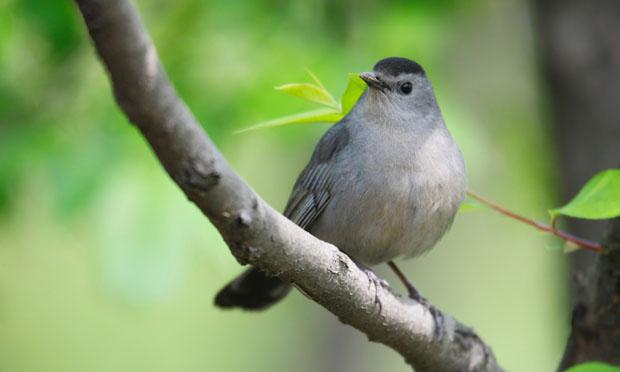
To better understand the issue, researchers at Towson University and the Smithsonian Conservation Biology Institute looked at nest success and juvenile post-fledging survival for gray catbirds (Dumatella carolinensis) at three sites in the Washington, D.C., area. The results were published in the Journal of Ornithology as “Population Demography of Gray Catbirds in the Suburban Matrix: Sources, Sinks and Domestic Cats” (PDF).

The study’s findings include:

  • In the three areas studied, 61% of post-fledgling birds died before reaching independence. Causes of death included predation, starvation, collisions and disease.
  • Predation on juvenile birds accounted for 79% of all deaths. Predators included hawks, crows, blue jays, chipmunks, rats, and domestic or feral cats.
  • Nearly half of all bird deaths with a known cause were attributable to cats. One reason is that cat populations are “subsidized” by humans, allowing them to exist at densities far exceeding those of native predators.
  • In some of the areas studied, predation was so serious that the birds studied could not replenish their numbers over time.

Despite some limitations, in particular the sample size, the researchers felt that the study demonstrated that “differences in predator communities, be they native or introduced, have the capacity to influence survival probabilities during both nesting and post-fledging stages” for birds in urban and suburban areas.

Tags: biodiversity, wildlife, conservation


By | June 7, 2011

Note to instructor: The suggested assignments are designed for flexibility. They can be used in whole or part and can be adapted to a particular task -- for example, the newswriting assignments could be applied to the writing of the headline, the lead, the nut graph or the full story. Material from the assignments could also be combined with other material, for example, in the writing of a background, feature or local-angle story.

Analysis assignments

Read the study titled "Population Demography of Gray Catbirds in the Suburban Matrix: Sources, Sinks and Domestic Cats" (PDF).

  1. Summarize the study in fewer than 40 words.
  2. Express the study's key term(s) in language a lay audience can understand.
  3. Evaluate the study's limitations. (For example: Do the results conflict with those of other reliable studies? Are there weaknesses in the study's data or research design?)

Read the study-related New York Times article titled "Tweety Was Right: Cats Are a Bird’s No. 1 Enemy."

  1. Reporter's use of the study: Evaluate what the reporter chose to include and exclude from the study. Would the audience have acquired a clear understanding of the study's findings and limits from this article?
  2. Reporter's use of other material: Assess the material in the article that is not derived from the study. (for example: Does the reporter place the study in the context of other research and to what effect? Does the reporter include reactions to the study from other researchers or interested parties [e.g., political groups business leaders, or community members] and are their credentials or possible biases made clear?)

Newswriting assignments

  1. Write a lead (or headline or nut graph) based on the study.
  2. Spend 60 minutes exploring the issue by accessing sources of information other than the study. Write a lead (or headline or nut graph) based on the study but informed by the new information. Does the new information significantly change what one would write based on the study alone?
  3. Interview two sources with a stake in or knowledge of the issue. Be prepared to provide them with a short summary of the study in order to get their response to it. Write a 400-word article about the study incorporating material from the interviews.
  4. Spend additional time exploring the issue and then write a 1,200-word background article, focusing on major aspects of the issue.

Leave a comment