

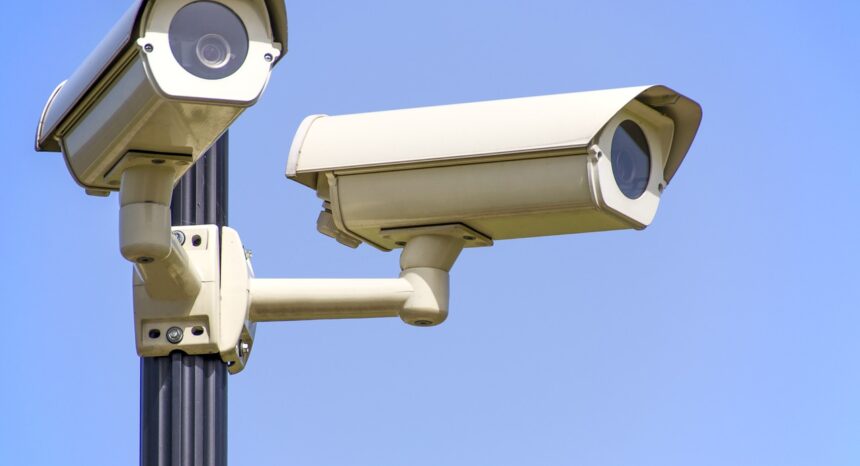


Millions of closed-circuit television (CCTV) cameras are installed in streets and businesses throughout the world with the stated goal of reducing crime and increasing public safety. The United Kingdom is one of the most enthusiastic proponents, with an estimated 1.9 million cameras in 2011 — one for every 32 U.K. residents — and the number continues to rise. Chicago reportedly has at least 15,000 cameras installed in one of the largest U.S. networks — which has prompted civil liberties groups to express strong concerns — while in New York, cameras are increasingly found both on public transit as well as in businesses and even high-end residences. The 9/11 attacks led many municipalities to start installing CCTV systems, but sometimes what’s put in place goes beyond the original mandate: For example, Oakland, Calif., took $7 million of federal money intended for safeguarding its port and is using it to create a citywide surveillance system instead.
According to industry estimates, the global video surveillance market is expected to grow from $11.5 billion in 2008 to $37.7 billion in 2015. A 2013 New York Times/CBS poll found that 78% of respondents supported the use of surveillance cameras in public places, and authorities tend to point to spectacular successes — for example, crucial images cameras provided of the Boston Marathon bombing suspects or the identification of those responsible for the 2005 London attacks. Still, concerns remain about systems’ potential to violate personal privacy as well as their overall cost-effectiveness. A 2013 Chicago Tribune opinion piece quoted a city spokesman as saying that surveillance cameras helped solve 4,500 crimes over four years, but the writer notes that more than a million are estimated to have taken place over that time period — meaning that the cameras’ contribution was 0.05% at best.
CCTV cameras also have the potential of creating unintended effects, good and bad. The “halo effect” refers to the potential for greater security in areas outside the view of cameras; this could be offset by the “displacement effect,” which pushes antisocial activity to other parts of the city. Cameras could also promote a false sense of security and lead citizens to take fewer precautions, or they could also cause more crimes to be reported, and thus lead to a perceived increase in crime. And as with the 2013 revelations of widespread data collection by the U.S. National Security Administration, the indiscriminate gathering of information on law-abiding citizens, however well-intentioned, has the potential for misuse. The Washington Post reported in February 2014 that new aerial video surveillance technologies are being deployed that can monitor virtually everything in an area the size of a small city.
A 2010 document from the European Forum for Urban Security, “Charter for a Democratic Use of Video-Surveillance,” provides a useful overview of the issues at stake as well as a set of principles and tools to ensure that citizens’ rights are respected with CCTV systems. These include:
- Necessity: The use of camera systems must be justified empirically, ideally by an independent authority. Objectives and intended outcomes must be defined.
- Proportionality: CCTV equipment must be appropriate for the problem it is intended to address. Technology should “respond to the established objectives, without going further.” Data should be protected and the length of time it is retained be clearly defined.
- Transparency: Citizens should know what the objectives of a CCTV system are, what its installation and operational costs are, the areas being surveyed, and what the results are. Reports should occur regularly so citizens can make informed decisions.
- Accountability: Those in charge of public CCTV systems should be clearly identified and accountable to the public, whether the systems are run by the government or private firms.
- Independent oversight: An external body should be charged with ensuring that systems respect the public’s rights and are achieving their stated objectives. Ideally citizens would have a voice in the oversight process.
Below is a selection of studies that shed light on the use of CCTV cameras, in particular their effects on crime. The term “viewshed” is used in many of the studies, and refers to the area visible to cameras from their fixed locations.
——————-
“Analyzing the Influence of Micro-Level Factors on CCTV Camera Effect”
Piza, Eric L.; Caplan, Joel M.; Kennedy, Leslie W. Journal of Quantitative Criminology, June 2014, Volume 30, Issue 2, pp. 237-264.
Abstract: “Objectives: Despite the popularity of closed circuit television (CCTV), evidence of its crime prevention capabilities is inconclusive. Research has largely reported CCTV effect as “mixed” without explaining this variance. The current study contributes to the literature by testing the influence of several micro-level factors on changes in crime levels within CCTV areas of Newark, NJ. Methods: Viewsheds, denoting the line-of-sight of CCTV cameras, were units of analysis (N = 117). Location quotients, controlling for viewshed size and control-area crime incidence, measured changes in the levels of six crime categories, from the pre-installation period to the post-installation period. Ordinary least squares regression models tested the influence of specific micro-level factors—environmental features, camera line-of-sight, enforcement activity, and camera design—on each crime category. Results: First, the influence of environmental features differed across crime categories, with specific environs being related to the reduction of certain crimes and the increase of others. Second, CCTV-generated enforcement was related to the reduction of overall crime, violent crime and theft-from-auto. Third, obstructions to CCTV line-of-sight caused by immovable objects were related to increased levels of auto theft and decreased levels of violent crime, theft from auto and robbery. Conclusions: The findings suggest that CCTV operations should be designed in a manner that heightens their deterrent effect. Specifically, police should account for the presence of crime generators/attractors and ground-level obstructions when selecting camera sites, and design the operational strategy in a manner that generates maximum levels of enforcement.”
“Public Area CCTV and Crime Prevention: An Updated Systematic Review and Meta-Analysis”
Welsh, Brandon C.; Farrington, David P. Justice Quarterly, October 2009, Vol. 26, No. 4.
Summary: This meta-analysis examined 93 studies on surveillance systems to see how effective they are at reducing crime and deemed 44 to be sufficiently rigorous for inclusion. Many of the studies were based in the United Kingdom, while others were in U.S. cities such as Cincinnati and New York. The analysis found that surveillance systems were most effective in parking lots, where their use resulted in a 51% decrease in crime. Systems in other public settings had some effect on crime — a 7% decrease in city centers and in public housing communities, and a 23% drop in public transit systems — but the results weren’t statistically significant. When sorted by country, systems in the United Kingdom accounted for the majority of the decrease; the drop in other countries was insignificant. The study concludes that while surveillance cameras can be effective in specific contexts such as parking lots and public-transit systems, the potential financial and societal costs require greater research.
“Here’s Looking at You: An Evaluation of Public CCTV Cameras and Their Effects on Crime and Disorder”
McLean, Sarah J.; Worden, Robert E.; Kim, MoonSun. Criminal Justice Review, July 2013. doi: 10.1177/0734016813492415.
Abstract: “We examine the impacts of public surveillance cameras on crime and disorder in Schenectady, N.Y., a medium-sized city in the northeastern United States. We assessed camera impacts by analyzing monthly counts of crime and disorder-related calls for service that occurred within each camera’s 150-foot viewshed as an interrupted time series, with the interruption at the time that the camera in question was activated. We also analyzed counts of incidents between 150 and 350 feet of cameras to assess displacement effects and diffusion of benefits. We further estimated camera effects on counts of only incidents in public locations — street crimes. Our study suggests that cameras have had effects on crime, even more consistent effects on disorder, and that the visibility of cameras is associated with its impact on crime and disorder. We conclude by discussing the implications of the findings and discuss the questions to which future research should be directed.
“Police-monitored CCTV Cameras in Newark, N.J.: A Quasi-experimental Test of Crime Deterrence”
Caplan, Joel M.; Kennedy, Leslie W.; Petrossian, Gohar. Journal of Experimental Criminology, September 2011, Vol. 7, Issue 3, 255-274. doi: 10.1007/s11292-011-9125-9.
Abstract: “Using camera installation sites and randomly selected control sites, [we] assessed the impact of CCTV on the crimes of shootings, auto thefts, and thefts from autos in Newark, N.J., for 13 months before and after camera installation dates. Strategically placed cameras were not any different from randomly placed cameras at deterring crime within their viewsheds; there were statistically significant reductions in auto thefts within viewsheds after camera installations; there were significant improvements to location quotient values for shootings and auto thefts after camera installations. There was no significant displacement and there was a small diffusion of benefits, which was greater for auto thefts than shootings. The system of cameras in Newark is not as efficient as it could be at deterring certain street crimes; some camera locations are significantly more effective than others.”
“CCTV and Crime Displacement: A Quasi-experimental Evaluation”
Cerezo, Ana. European Journal of Criminology, March 2013, Vol. 10, No. 2, 222-236. doi: 10.1177/1477370812468379.
Abstract: “The installation of CCTV cameras in the historic centre of Malaga [Spain] in March 2007 was the main crime prevention initiative implemented in the city during the past few years. Using a quasi-experimental design with a pre/post test, we collected data from interviews with CCTV operators, police officers and local authority officials and from surveys of pedestrians and shopkeepers. The team also examined police crime data and CCTV incident data. In this paper we will discuss the results in terms of the following three hypotheses relating to crime reduction, displacement and public security: (a) the use of cameras reduces the levels of crime, whether property crime (robberies and burglaries), crimes against people or both; (b) some of those crimes are displaced to nearby areas within or close to the city centre where there is no camera coverage but where there are similar opportunities to commit crimes; and (c) people claim to feel safer in the city centre after dark after the cameras were introduced.
“Does CCTV Displace Crime?”
Waples, Sam; Gil, Martin; Fisher, Peter. Criminology and Criminal Justice, May 2009, Vol. 9, No. 2, 207-224. doi: 10.1177/1748895809102554.
Abstract: “Crime displacement is a concern often raised regarding situational crime prevention measures. A national evaluation of closed circuit television cameras (CCTV) has provided an interesting test-bed for displacement research. A number of methods have been used to investigate displacement, in particular visualization techniques making use of geographical information systems (GIS) have been introduced to the identification of spatial displacement. Results concur with current literature in that spatial displacement of crime does occur, but it was only detected infrequently. Spatial displacement is found not to occur uniformly across offence type or space, notably the most evident spatial displacement was actually found to be occurring within target areas themselves.”
“Measuring the Crime Displacement and Diffusion of Benefit Effects of Open-street CCTV in South Korea”
Park, Hyeon Ho; Oh, Gyeong Seok; Paek, Seung Yeop. International Journal of Law, Crime and Justice, September 2012, Vol. 40, Issue 3, 179-191. doi: 10.1016/j.ijlcj.2012.03.003.
Abstract: “Along with CCTV’s perceived high expectations as crime deterrent, there is also a growing controversy over CCTV’s potentially unexpected limitations. For example, the crime displacement (the presence of CCTV will change the locations of crime and its total number will not change) and the diffusion effects of crime control benefits (the crime prevention effect of CCTV may filter through to neighboring areas) are the representative controversial issues. In this study, we aimed to verify the crime displacement and the diffusion of benefit of open-street CCTV by analyzing the crime tendencies empirically…. The results [of this study] showed that the crime prevention effect of the CCTV was significant. The number of robberies and thefts in the areas with CCTV installed reduced by 47.4%, while the areas without CCTV showed practically no change in the number of crimes. The crime displacement caused by the CCTV was not either found or inconsequential and the crime rates in the neighboring areas also decreased slightly.”
“Suspiciousness Perception in Dynamic Scenes: A Comparison of CCTV Operators and Novices”
Howard, Christina J.; et al. Frontiers in Human Neuroscience, August 2013. doi: 10.3389/fnhum.2013.00441.
Abstract: “How attention is used to perceive and evaluate dynamic, realistic scenes is more poorly understood… We investigated these issues when an observer has a specific, and naturalistic, task: closed-circuit television (CCTV) monitoring. We concurrently recorded eye movements and ratings of perceived suspiciousness as different observers watched the same set of clips from real CCTV footage. Trained CCTV operators showed greater consistency in fixation location and greater consistency in suspiciousness judgments than untrained observers. Training appears to increase between-operators consistency by learning ‘knowing what to look for’ in these scenes.”
“A Prosperous ‘Business’: The Success of CCTV through the Eyes of International Literature”
Séverine, Germain. Surveillance & Society, 2013, Vol. 11 Issue 1/2, 134.
Abstract: “This article deals with a paradox: Video surveillance becomes widespread, in more and more numerous social and national spaces, while its effects in terms of crime prevention and/or law enforcement and community reassurance are not demonstrated. Through a critical analysis of the international literature on CCTV, this article attempts to identify the reasons advanced to explain the ‘success’ of this technology. Three kinds of approaches, which embody three ways of defining the political and social impact of CCTV, can be distinguished: Surveillance studies, impact analyses and use studies. This paper discusses these works and the answers they bring to the understanding of CCTV development. It claims that micro-level case study analysis allows us to grasp subtly the locally observable mechanisms by which new actors can be enrolled in the device and new legitimizations are made possible.”
Keywords: crime, public safety, CCTV, surveillance, prevention, policing, research roundup, policing


Expert Commentary