

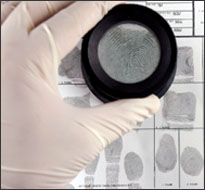

The Supreme Court ruled in June 2013 that DNA evidence may be collected at the time of a person’s arrest in order to determine if he or she may have committed crimes unrelated to the arrest in question. Many states already allow this practice. Of course, DNA evidence has helped confirm the guilt of many criminals, and it has played a crucial role in helping to free innocent persons who were falsely convicted.
But studies show that forensic science remains imperfect. A 2009 report from the National Academy of Sciences (NAS) notes:
[A]lthough DNA analysis is considered the most reliable forensic tool available today, laboratories nonetheless can make errors working with either nuclear DNA or mtDNA — errors such as mislabeling samples, losing samples, or misinterpreting the data. Standard setting, accreditation of laboratories, and certification of individuals aim to address many of these problems, and although many laboratories have excellent training and quality control programs, even accredited laboratories make mistakes.
That NAS report also discusses the “CSI effect” — whereby Hollywood portrayals of forensic science have built up unrealistic public expectations of perfection and certainty — changing courtroom practice and citizens’ frameworks for evaluating evidence.
A 2012 study published in the Journal of Forensic Sciences, titled “A Search for Obligatory Paternal Alleles in a DNA Database to Find an Alleged Rapist in a Fatherless Paternity Case,” finds that “the search of databases in rape paternity cases, as in other criminal cases, should be approached with extreme caution. The search may provide false positives as we have shown. A ‘hit’ should be regarded only as a preliminary finding and must be supported by matches at a greater number or more informative loci as well as by nongenetic evidence.” A 2011 paper in the journal Social Studies of Science reviews the relevant research literature with respect to DNA profiling, the field’s development and attendant controversies.
Evaluating DNA evidence has increasingly become a matter of complex statistical analysis: A 2014 paper in the Annual Review of Statistics and Its Application discusses ongoing problems and progress in the field.
Other subjective aspects of criminal investigations may have an impact on areas that are often seen as more “pure” science. For example, false confessions can be disturbingly easy to generate in social experiments, particularly when persuasive techniques such as bluffing are used. A 2012 study from the City University of New York, the University of California-Irvine and Nova Southeastern University published in Psychological Science, “Confessions That Corrupt: Evidence from the DNA Exoneration Case Files,” examines the link between confessions and the corruption of other evidence in real-world situations.
The researchers examined 241 cases of exonerated individuals from The Innocence Project between 1992 and 2009 to determine the likelihood that a false confession taints other types of evidence, the kinds of evidence most affected by a false confession and how often this occurs.
Key findings include:
- False confessions were implicated in nearly 25% of the exonerations examined, but were less common than eyewitness false identifications (75%) or misuse of forensic evidence (51%).
- Nearly 78% of the cases associated with false confessions contained multiple types of problematic evidence, compared to only 47% of cases involving true confessions. Nearly 46% of false-confession cases contained one additional non-confession evidence error; 32% contained two or more.
- “False confessions were most often accompanied by invalid or improper forensic science, eyewitness identification mistakes and informants.”
- Researchers compared the prevalence of false confession errors to that of eyewitness errors, and determined that “pure confession cases contained more additional types of errors…. More specifically, pure confession cases were significantly more likely than pure eyewitness cases to be accompanied by forensic-science errors (67% vs. 45%).”
- If the false confession is among the first pieces of evidence collected, it tends to color the interpretation of subsequent evidence. Researchers found that “confessions were more likely to precede than to follow both forensic-science errors … and informant errors.”
Human error is often to blame for corrupted evidence, the researchers note, including scientific evidence: “As a result of scandalous improprieties in several crime laboratories and the frequency with which forensic-science errors had surfaced in wrongful convictions, the National Academy of Sciences (2009) was highly critical of a broad range of forensic disciplines.” The researchers note that their study focused on a limited number of variables, and suggest that a confession’s impact on case evidence may be more far-reaching than described in the study.
Tags: civil rights, crime, science, law

Expert Commentary