

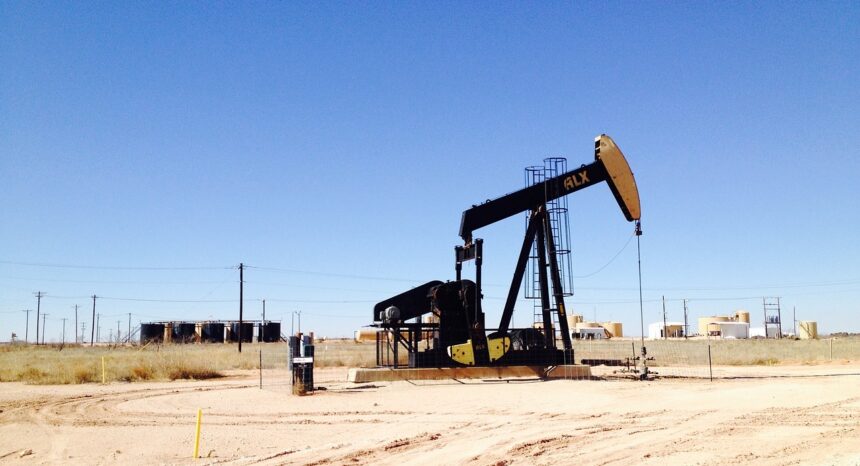


Hydraulic fracturing — commonly known as “fracking” — has led to a boom in U.S. energy production, with a number of benefits. According a 2014 report from the Federal Reserve Bank of Kansas City, in states where natural gas fuels a significantly higher proportion of power plants, average electricity prices have fallen. Because natural gas emits far less carbon than coal, fracking can help states meet rules proposed by the EPA in 2013 that limit carbon emissions by power plants. Research has also shown that the new rules could financially benefit states — even those that oppose them — by creating new demand for natural gas.
While lower electricity prices and a potential cut in greenhouse-gas emissions are good things, it’s essential to better understand and weigh the environmental and health effects of fracking. The technique requires drilling down through hundreds of feet of rock and then horizontally through shale beds. Millions of gallons of sand and chemicals are then pumped down under high pressure to fracture the rock formations, releasing the natural gas. But in drilling down to the deposits, wells often pass through aquifers that provide water to communities, plants and wildlife on the surface. Leakage of shale gas into water supplies isn’t supposed to happen, but reports indicate otherwise.
While the surface impacts of natural-gas extraction are nothing compared to, say, mountaintop removal coal mining, they can be considerable, and the location of deposits frequently magnifies the problem — for example, the Barnet Shale, one of the richest in the U.S., underlies the entire Dallas-Fort Worth metropolitan area. Residents have little say over how gas wells are run, even those on their own property, and the impact on local roads and infrastructure can be severe: Heavy trucks must haul in gravel, pipes, water and chemicals, then haul out liquid fuels and waste — anywhere from 600 to 1,000 one-way trips for the fracking phase alone. And as droughts intensify, concerns rise over the massive quantities of water that hydraulic fracturing requires. For a sense of the public’s understanding of all of these issues, see the 2013 survey and report “American Perceptions of Hydraulic Fracturing,” from the Yale Project on Climate Change Communication.
Journalists and researchers have dug deep into the issue. Andrew Revkin, author of the New York Times‘ “Dot Earth” blog, has had much to say about the potential health impacts of shale gas. Tom Wilber, author of Under the Surface, has been tracking the issue. Abrahm Lustgarten and others at ProPublica have published many investigative pieces on fracking and curated a collection of other journalistic work; Bryan Walsh of Time magazine has closely covered the issue. Charles Schmidt published a useful overview in Environmental Health Perspectives, “Blind Rush? Shale Gas Boom Proceeds Amid Human Health Questions,” while Nature magazine has a helpful point-counterpoint to illustrate the legitimate concerns of those on both sides of the issue. Meanwhile, the EPA continues to study the impacts on drinking water resources.
Below is a selection of studies that provide insight into the potential health impacts of shale gas extraction and fracking:
__________
“Hydraulic Fracturing and the Risk of Silicosis”
Rosenman, Kenneth D. Clinical Pulmonary Medicine, July 2014, Vol. 21, Issue 4. doi:10.1097/CPM.0000000000000046.
Abstract: “Fracking,” the common name for hydraulic fracturing is widely used to extract oil and gas, particularly from deep shale formations. A single well requires the use of millions of gallons of water and tons of sand. Air sampling results show that the majority of silica levels at hydraulic fracturing sites were above the Occupational Safety and Health Administration allowable standard and 84% were above Occupational Safety and Health Administration’s new proposed standard. These exposure levels put workers, particularly sand mover operators and T-belt operators who had the highest levels, at risk of silicosis and the other silica-related conditions of lung cancer, end-stage renal disease, chronic obstructive pulmonary disease, tuberculosis, and connective tissue disease. Because of the fracking industry’s demand for silica, sand mining has markedly increased, which has also increased the number of workers at risk of developing silicosis and other silica-related conditions in the mining industry…. Given the long latency, 20 or more years, of most silica-related health conditions and the fact that fracking did not become widely used until the 2000s, it may be years before health care providers see clinical-related disease in their practices.”
“Birth Outcomes and Maternal Residential Proximity to Natural Gas Development in Rural Colorado”
McKenzie, Liza M.; Guo, R.; Witter, R.Z.; Savitz, D.A.; Newman, L.S.; Adgate, J.L. 2014. Environmental Health Perspectives. doi: 10.1289/ehp.1306722. , 122, 412-417.
Abstract: “We examined associations between maternal residential proximity to [natural gas development] and birth outcomes in a retrospective cohort study of 124,842 births between 1996 and 2009 in rural Colorado. We calculated inverse distance weighted natural-gas well counts within a 10-mile radius of maternal residence to estimate maternal exposure…. Conclusions: In this large cohort, we observed an association between density and proximity of natural gas wells within a 10-mile radius of maternal residence and prevalence of [congenital heart defects] and possibly [neural tube defects]. Greater specificity in exposure estimates is needed to further explore these associations.”
“Estrogen and Androgen Receptor Activities of Hydraulic Fracturing Chemicals and Surface and Ground Water in a Drilling-Dense Region”
Kassotis, Christopher D.; Tillitt, Donald E.; Davis, J. Wade; Hormann, Annette M.; Nagel, Susan C. Endocrinology, December 2013. doi: 10.1210/en.2013-1697.
Abstract: “The rapid rise in natural gas extraction using hydraulic fracturing increases the potential for contamination of surface and ground water from chemicals used throughout the process. Hundreds of products containing more than 750 chemicals and components are potentially used throughout the extraction process, including more than 100 known or suspected endocrine-disrupting chemicals. We hypothesized that a selected subset of chemicals used in natural gas drilling operations and also surface and ground water samples collected in a drilling-dense region of Garfield County, Colorado, would exhibit estrogen and androgen receptor activities. Water samples were collected, solid-phase extracted, and measured for estrogen and androgen receptor activities using reporter gene assays in human cell lines. Of the 39 unique water samples, 89%, 41%, 12%, and 46% exhibited estrogenic, antiestrogenic, androgenic, and antiandrogenic activities, respectively…. The majority of water samples collected from sites in a drilling-dense region of Colorado exhibited more estrogenic, antiestrogenic, or antiandrogenic activities than reference sites with limited nearby drilling operations. Our data suggest that natural gas drilling operations may result in elevated endocrine-disrupting chemical activity in surface and ground water.”
“Human Health Risk Assessment of Air Emissions from Development of Unconventional Natural Gas Resources”
McKenzie, Lisa M.; Witter, Roxana Z.; Newman, Lee S.; Adgate, John L. Science of the Total Environment, May 2012, Vol. 424, 79-87.
Findings: “Residents living ≤ 1/2 mile from wells are at greater risk for health effects from [natural gas development] than are residents living >1/2 mile from wells. Subchronic exposures to air pollutants during well completion activities present the greatest potential for health effects. The subchronic non-cancer hazard index (HI) of 5 for residents ≤ 1/2 mile from wells was driven primarily by exposure to trimethylbenzenes, xylenes, and aliphatic hydrocarbons. Chronic HIs were 1 and 0.4. for residents ≤ 1/2 mile from wells and > 1/2 mile from wells, respectively. Cumulative cancer risks were 10 in a million and 6 in a million for residents living ≤ 1/2 mile and > 1/2 mile from wells, respectively, with benzene as the major contributor to the risk.”
“Natural Gas Operations from a Public Health Perspective”
Colborn, Theo; Kwiatkowski, Carol; Schultz, Kim; Bachran, Mary. Human and Ecological Risk Assessment, September 2011, 1039-1056. doi: 10.1080/10807039.2011.605662.
Abstract: “The technology to recover natural gas depends on undisclosed types and amounts of toxic chemicals. A list of 944 products containing 632 chemicals used during natural gas operations was compiled. Literature searches were conducted to determine potential health effects of the 353 chemicals identified by Chemical Abstract Service (CAS) numbers. More than 75% of the chemicals could affect the skin, eyes, and other sensory organs, and the respiratory and gastrointestinal systems. Approximately 40% to 50% could affect the brain/nervous system, immune and cardiovascular systems, and the kidneys; 37% could affect the endocrine system; and 25% could cause cancer and mutations. These results indicate that many chemicals used during the fracturing and drilling stages of gas operations may have long-term health effects that are not immediately expressed. In addition, an example was provided of waste evaporation pit residuals that contained numerous chemicals on the Comprehensive Environmental Response, Compensation, and Liability Act (CERCLA) and Emergency Planning and Community Right-to-Know Act (EPCRA) lists of hazardous substances.”
“Shale Gas vs. Coal: Policy Implications from Environmental Impact Comparisons of Shale Gas, Conventional Gas and Coal on Air, Water and Land in the United States”
Jenner, Steffen; Lamadrid, Alberto J. Energy Policy, February 2013, Vol. 53, 442-453. doi: 10.1016/j.enpol.2012.11.010.
Abstract: “The aim of this paper is to examine the major environmental impacts of shale gas, conventional gas and coal on air, water, and land in the United States. These factors decisively affect the quality of life (public health and safety) as well as local and global environmental protection. Comparing various lifecycle assessments, this paper will suggest that a shift from coal to shale gas would benefit public health, the safety of workers, local environmental protection, water consumption, and the land surface. Most likely, shale gas also comes with a smaller GHG footprint than coal. However, shale gas extraction can affect water safety. This paper also discusses related aspects that exemplify how shale gas can be more beneficial in the short and long term. First, there are technical solutions readily available to fix the most crucial problems of shale gas extraction, such as methane leakages and other geo-hazards. Second, shale gas is best equipped to smooth the transition to an age of renewable energy. Finally, this paper will recommend hybrid policy regulations.”
“Impact of Shale Gas Development on Regional Water Quality”
Vidic, R.D.; Brantley, S.L.; Vandenbossche, J.M.; Yoxtheimer, D.; Abad, J.D. Science, May 2013, Vol. 340, No. 6134. doi: 10.1126/science.1235009.
Abstract: “Unconventional natural gas resources offer an opportunity to access a relatively clean fossil fuel that could potentially lead to energy independence for some countries. Horizontal drilling and hydraulic fracturing make the extraction of tightly bound natural gas from shale formations economically feasible. These technologies are not free from environmental risks, however, especially those related to regional water quality, such as gas migration, contaminant transport through induced and natural fractures, wastewater discharge, and accidental spills. We review the current understanding of environmental issues associated with unconventional gas extraction. Improved understanding of the fate and transport of contaminants of concern and increased long-term monitoring and data dissemination will help manage these water-quality risks today and in the future.”
“Research and Policy Recommendations for Hydraulic Fracturing and Shale-Gas Extraction”
Jackson, Robert B.; Pearson, Brooks Rainey; Osborn, Stephen G.; Warner, Nathaniel R.; Vengosh, Avner. Center on Global Change, Duke University, May 2011.
Findings: “The potential for [aquifer] contamination from wastewaters associated with hydraulic fracturing depends on many factors, including the toxicity of the fracturing fluid and the produced waters, how close the gas well and fractured zone are to shallow ground water, and the transport and disposal of wastewaters. Despite precautions by industry, contamination may sometimes occur through corroded well casings, spilled fracturing fluid at a drilling site, leaked wastewater, or, more controversially, the direct movement of methane or water upwards from deep underground…. During the first month of drilling and production alone, a single well can produce a million or more gallons of waste water that can contain pollutants in concentrations far exceeding those considered safe for drinking water and for release into the environment. These pollutants sometimes include formaldehyde, boric acid, methanol, hydrochloric acid, and isopropanol, which can damage the brain, eyes, skin, and nervous system on direct contact. Another potential type of contamination comes from naturally occurring salts, metals, and radioactive chemicals found deep underground.”
“Methane Contamination of Drinking Water Accompanying Gas-Well Drilling and Hydraulic Fracturing”
Osborn, Stephen G.; Vengosh, Avner; Warner, Nathaniel R.; Jackson, Robert B. Proceedings of the National Academy of Sciences, May 2011. doi: 10.1073/pnas.1100682108.
Findings: “Directional drilling and hydraulic-fracturing technologies are dramatically increasing natural-gas extraction. In aquifers overlying the Marcellus and Utica shale formations of northeastern Pennsylvania and upstate New York, we document systematic evidence for methane contamination of drinking water associated with shalegas extraction. In active gas-extraction areas (one or more gas wells within 1 km), average and maximum methane concentrations in drinking-water wells increased with proximity to the nearest gas well and were 19.2 and 64 mg CH4 L-1 (n = 26), a potential explosion hazard; in contrast, dissolved methane samples in neighboring nonextraction sites (no gas wells within 1 km) within similar geologic formations and hydrogeologic regimes averaged only 1.1 mgL-1 (P < 0.05; n = 34).”
“Geochemical Evidence for Possible Natural Migration of Marcellus Formation Brine to Shallow Aquifers In Pennsylvania”
Warner, Nathaniel R.; et al. Proceedings of the National Academy of Sciences, May 2012. doi: 10.1073/pnas.1121181109.
Abstract: “We present geochemical evidence from northeastern Pennsylvania showing that pathways, unrelated to recent drilling activities, exist in some locations between deep underlying formations and shallow drinking water aquifers…. The occurrences of saline water do not correlate with the location of shale-gas wells and are consistent with reported data before rapid shale-gas development in the region; however, the presence of these fluids suggests conductive pathways and specific geostructural and/or hydrodynamic regimes in northeastern Pennsylvania that are at increased risk for contamination of shallow drinking water resources, particularly by fugitive gases, because of natural hydraulic connections to deeper formations.”
“Potential Contaminant Pathways from Hydraulically Fractured Shale to Aquifers”
Myers, T. Ground Water, 2012. doi: 10.1111/j.1745-6584.2012.00933.x.
Abstract: “Hydraulic fracturing of deep shale beds to develop natural gas has caused concern regarding the potential for various forms of water pollution. Two potential pathways — advective transport through bulk media and preferential flow through fractures — could allow the transport of contaminants from the fractured shale to aquifers. There is substantial geologic evidence that natural vertical flow drives contaminants, mostly brine, to near the surface from deep evaporite sources. Interpretative modeling shows that advective transport could require up to tens of thousands of years to move contaminants to the surface, but also that fracking the shale could reduce that transport time to tens or hundreds of years. Conductive faults or fracture zones, as found throughout the Marcellus shale region, could reduce the travel time further. Injection of up to 15,000,000 [liters] of fluid into the shale generates high pressure at the well, which decreases with distance from the well and with time after injection as the fluid advects through the shale. The advection displaces native fluids, mostly brine, and fractures the bulk media widening existing fractures. Simulated pressure returns to pre-injection levels in about 300 [days]. The overall system requires from 3 to 6 years to reach a new equilibrium reflecting the significant changes caused by fracking the shale, which could allow advective transport to aquifers in less than 10 years. The rapid expansion of hydraulic fracturing requires that monitoring systems be employed to track the movement of contaminants and that gas wells have a reasonable offset from faults.”
“Carbon and Hydrogen Isotopic Evidence for the Origin of Combustible Gases in Water-supply Wells in North-central Pennsylvania”
Révész, Kinga M.; Breen, Kevin J.; Baldassare, Alfred J.; Burruss, Robert C. Applied Geochemistry, December 2010, Vol. 25, Issue 12. doi: 10.1016/j.apgeochem.2010.09.011.
Abstract: “The origin of the combustible gases in groundwater from glacial-outwash and fractured-bedrock aquifers was investigated in northern Tioga County, Pennsylvania. Thermogenic methane (CH4) and ethane (C2H6) and microbial CH4 were found. Microbial CH4 is from natural in situ processes in the shale bedrock and occurs chiefly in the bedrock aquifer. The δ13C values of CH4 and C2H6 for the majority of thermogenic gases from water wells either matched or were between values for the samples of non-native storage-field gas from injection wells and the samples of gas from storage-field observation wells. Traces of C2H6 with microbial CH4 and a range of C and H isotopic compositions of CH4 indicate gases of different origins are mixing in sub-surface pathways; gas mixtures are present in groundwater. Pathways for gas migration and a specific source of the gases were not identified. Processes responsible for the presence of microbial gases in groundwater could be elucidated with further geochemical study.”
Keywords: pollution, greenhouse gases, fossil fuels, coal, research roundup, birth defects, water

Expert Commentary